Rolex Datejust Jubilee vs Oyster: Which Bracelet Should You Buy in the UK?
A practical SimLuxury guide to Rolex Datejust Jubilee vs Oyster, including style, comfort, daily wear, and how bracelet choice changes the whole feel of a Datejust.
Browse live watches
Compare what is actually available now, rather than staying in the brand argument.
Build a shortlist
Pre-fill the concierge by category so the next step is five live pieces, not a blank form.
If you want the short answer, choose Jubilee if you want Datejust to feel more distinctly Datejust: more fluid, more polished, and more obviously luxurious on the wrist. Choose Oyster if you want Datejust to feel cleaner, more understated, and easier as an all-round everyday Rolex. That is the practical split.
Buyers often underestimate this choice because the case and dial usually get all the attention. In real ownership, the bracelet changes the whole tone of the watch. The same Datejust can feel more classical, more jewellery-adjacent, or more relaxed and watch-first depending on whether it is on Jubilee or Oyster.
Quick answer
Choose Jubilee if
You want the more fluid, more polished, more recognisably Datejust bracelet and do not mind the watch feeling a little richer visually.
Choose Oyster if
You want a cleaner everyday Datejust with less bracelet flourish and a slightly sportier, more restrained overall read.
Best current explicit Jubilee benchmark
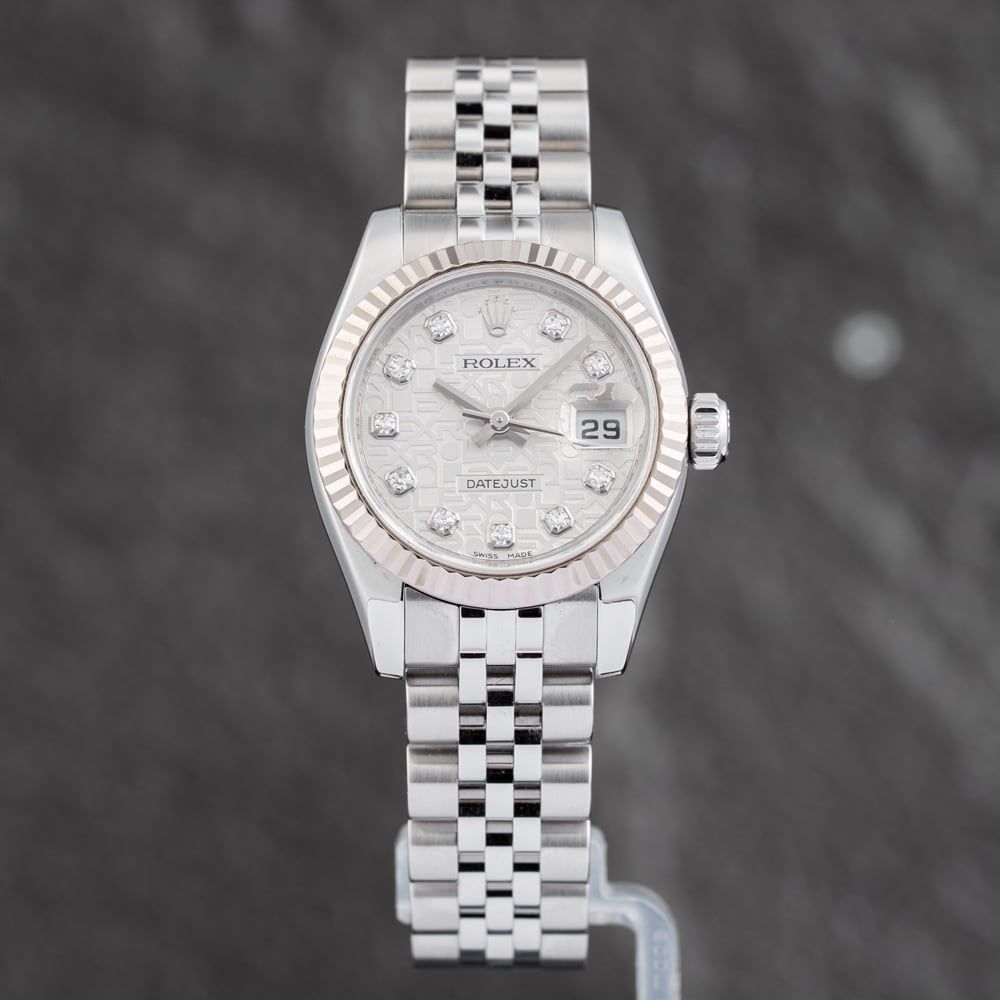
Pre-Owned Rolex Ladies Datejust Jubilee Silver Bracelet Watch.
Best current Oyster-style control case
The current SimLuxury Rolex product data does not label bracelet type perfectly on every Datejust listing, so the right use of the live inventory is to shortlist the right watch personality here, then confirm bracelet details on the product page and retailer listing before you buy. That is still enough to make a much better decision than treating bracelet as an afterthought.
Jubilee is usually the more recognisably Datejust bracelet
Jubilee often wins when the buyer wants Datejust to feel like Datejust from the first glance. The five-link structure adds more movement, more visual articulation, and usually a little more sparkle on the wrist. That is why the bracelet often makes the watch feel more polished even when nothing else changes.
This matters because many buyers are not just buying a Rolex. They are buying a Datejust specifically because they want one of Rolex’s most classical and most recognisable luxury forms. Jubilee tends to serve that instinct better than Oyster.
The clearest current example in the SimLuxury inventory is Pre-Owned Rolex Ladies Datejust Jubilee Silver Bracelet Watch. It is useful not because every reader wants a women’s Datejust, but because it shows very clearly how much bracelet architecture changes the personality of the watch. The Jubilee bracelet is part of the reason the watch feels refined before you even get to size or dial.
Oyster is usually the cleaner everyday answer
Oyster usually makes more sense when the buyer wants Datejust to feel simpler, firmer, and a little more understated. The three-link structure reads more direct and more watch-first. Even though Datejust is not a pure sports Rolex, Oyster can still make it feel less jewellery-led and easier to wear without the bracelet becoming part of the conversation.
That is why Oyster is so often the stronger choice for buyers who want one Rolex to wear frequently and casually. It usually removes some of the decorative energy that Jubilee adds. For some people, that is exactly what makes Datejust more usable.
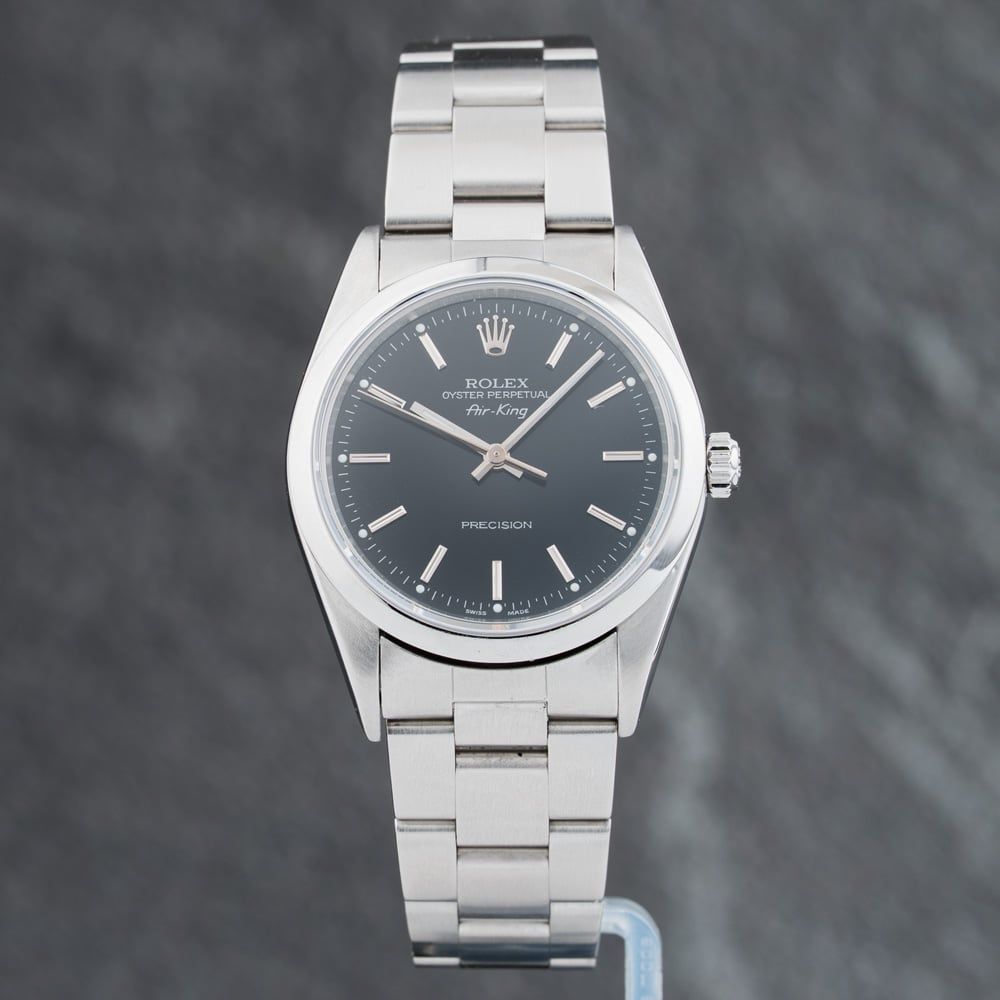
The best current control case for this cleaner Rolex instinct is Pre-Owned Rolex Air-King Watch. It is not a Datejust, but it is excellent at revealing whether your taste leans toward simpler Rolex design language. If you consistently prefer that cleaner mood, Oyster is usually the bracelet direction to take more seriously.
Comfort matters, but not in the simplistic way people say online
Jubilee is often described as the more comfortable bracelet because the smaller links can create a more supple feel around the wrist. That is real for many people. But it is not universal. Some buyers genuinely prefer Oyster because the simpler link structure feels more straightforward and more planted, not less luxurious.
So “which is more comfortable?” is the wrong starting question. The better question is which kind of comfort you prefer. Jubilee often feels more fluid. Oyster often feels more direct. Neither experience is automatically better.
Bracelet choice changes the style message more than case size alone
One of the biggest mistakes buyers make is choosing the bracelet after they choose everything else. Bracelet should be treated as part of the same decision as case size, dial detail, and metal. A more active dial with Jubilee can push the watch toward a richer, more dressed-up feel. A cleaner dial with Oyster can make the same basic Datejust idea feel calmer and more modern.
That is why the Datejust 36 vs 41 guide is a sensible companion read. Case size and bracelet choice interact. A smaller Datejust on Jubilee can still feel more visibly luxurious than a larger, cleaner Datejust on Oyster.
How to use the current SimLuxury Datejust listings properly
The current SimLuxury Datejust pages are still useful, even where bracelet detail needs confirmation on the retailer page. Pre-Owned Rolex Datejust Watch is the quieter benchmark if you want to judge the calmer side of Datejust. Pre-Owned Rolex Mens Datejust White Dial Two Colour Bracelet Watch and Pre-Owned Rolex Mens Datejust Black Dial Two Colour Bracelet Watch are useful if you want to test how much richer and more visible your ideal Datejust should feel overall.
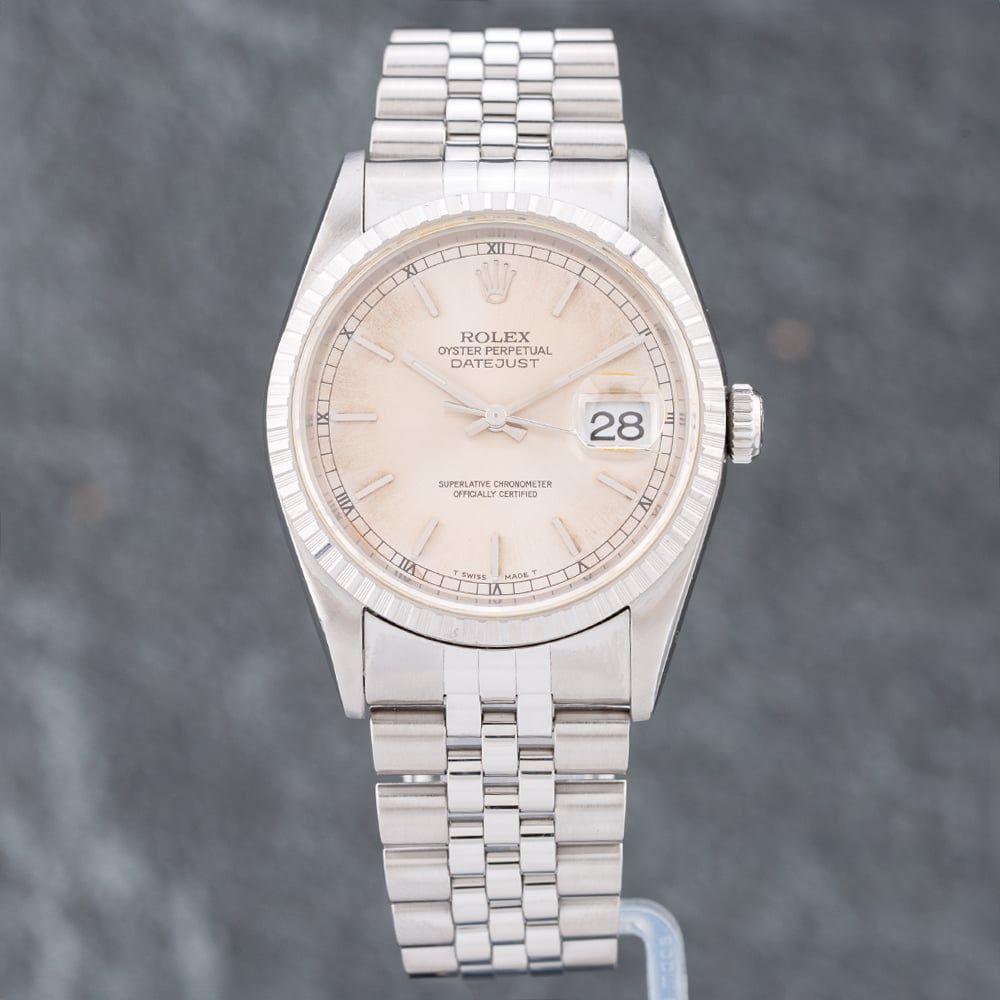
Pre-Owned Rolex Datejust Watch
£5,195
A strong cleaner-Datejust benchmark when you are deciding whether the watch should feel more restrained overall.
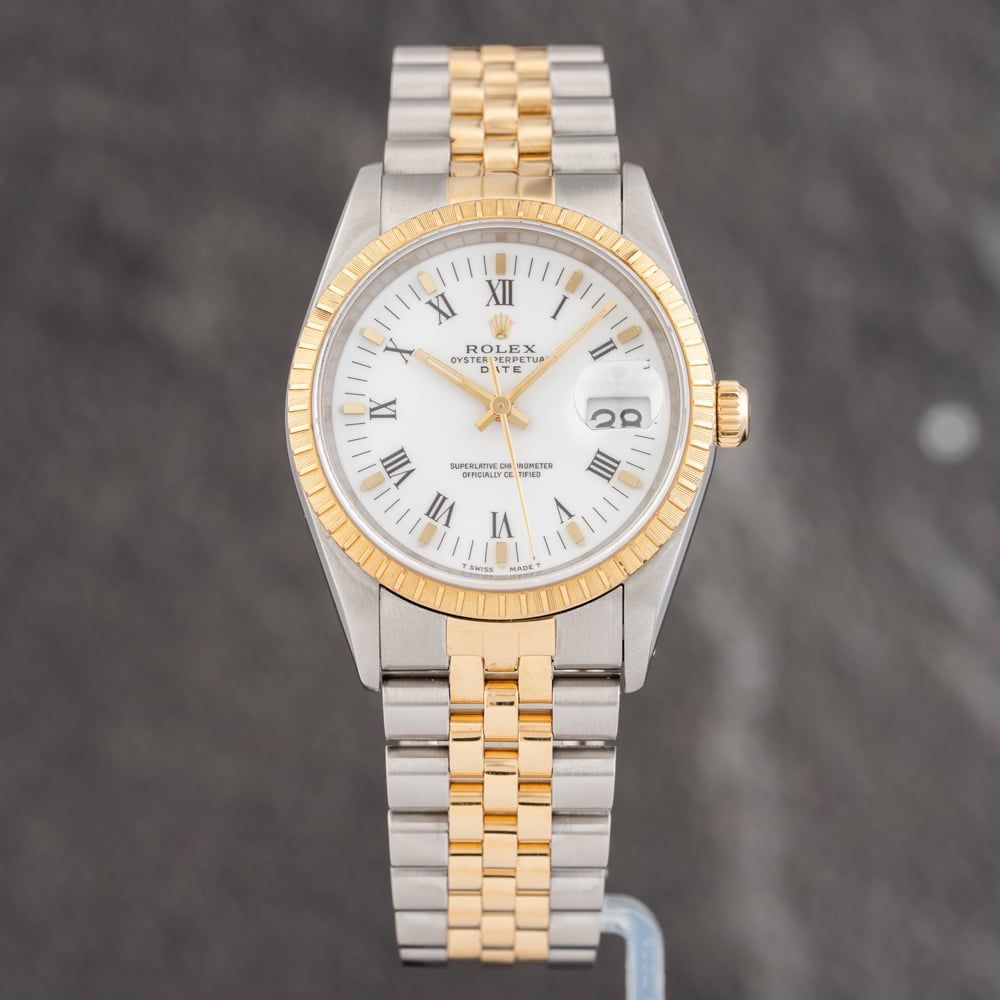
Pre-Owned Rolex Mens Datejust White Dial Two Colour Bracelet Watch
£5,995
Useful if you want stronger Datejust luxury presence, but still in a calmer tone than the darker two-tone references.
The practical workflow is simple. Decide whether you want the bracelet to contribute richness or restraint. Shortlist the live Datejusts that fit that mood. Then use the retailer page to confirm whether the exact watch is Jubilee or Oyster before you commit.
Who should usually buy Jubilee first
Choose Jubilee first if the bracelet is part of why you are attracted to Datejust. It is usually the better route for buyers who want the more classical, more polished, more obviously Datejust expression and do not mind the bracelet carrying some of the visual luxury.
Who should usually buy Oyster first
Choose Oyster first if you want Datejust to feel easier, simpler, and less decorated in everyday use. It is usually the better route for buyers who dress casually more often, prefer cleaner watches generally, or want Datejust to read as a very wearable Rolex rather than a more fluid luxury bracelet watch.
Final advice
Jubilee is usually the better answer if you want richer Datejust identity. Oyster is usually the better answer if you want cleaner everyday versatility. Neither bracelet is “better” in the abstract. The smarter choice is the one that makes the whole watch feel coherent with the way you actually dress and wear watches.
Start with the live pre-owned Rolex page, use the current Jubilee Datejust benchmark and the cleaner Air-King control case to clarify your taste, then use the Datejust buying guide and Datejust 36 vs 41 guide to narrow the full decision properly.
Quick answers
Is Jubilee more comfortable than Oyster on a Datejust?+
Is Oyster more sporty than Jubilee?+
Was Jubilee originally made for Datejust?+
Live picks
Live pieces that match this decision
Pre-Owned Rolex Ladies Datejust Jubilee Silver Bracelet Watch
£6,695
Pre-Owned Rolex Ladies Datejust with silver dial, Jubilee bracelet, and diamond hour markers. A classic ladies Datejust profile with automatic movement and original box and papers.
Best when you want stronger brand access, but still need to check condition, documentation, and retailer confidence carefully.
Pre-Owned Rolex Datejust Watch
£5,195
Pre-Owned Rolex Datejust Watch with stainless steel, silver dial, and bracelet. A clean steel Datejust route with automatic movement and 100 metres of water resistance.
Best when you want stronger brand access, but still need to check condition, documentation, and retailer confidence carefully.
Pre-Owned Rolex Mens Datejust White Dial Two Colour Bracelet Watch
£5,995
Pre-Owned Rolex Mens Datejust with white dial, two colour bracelet, and 18ct yellow gold bezel. A compact two-tone Rolex date model with automatic movement, box, and papers.
Best when you want stronger brand access, but still need to check condition, documentation, and retailer confidence carefully.
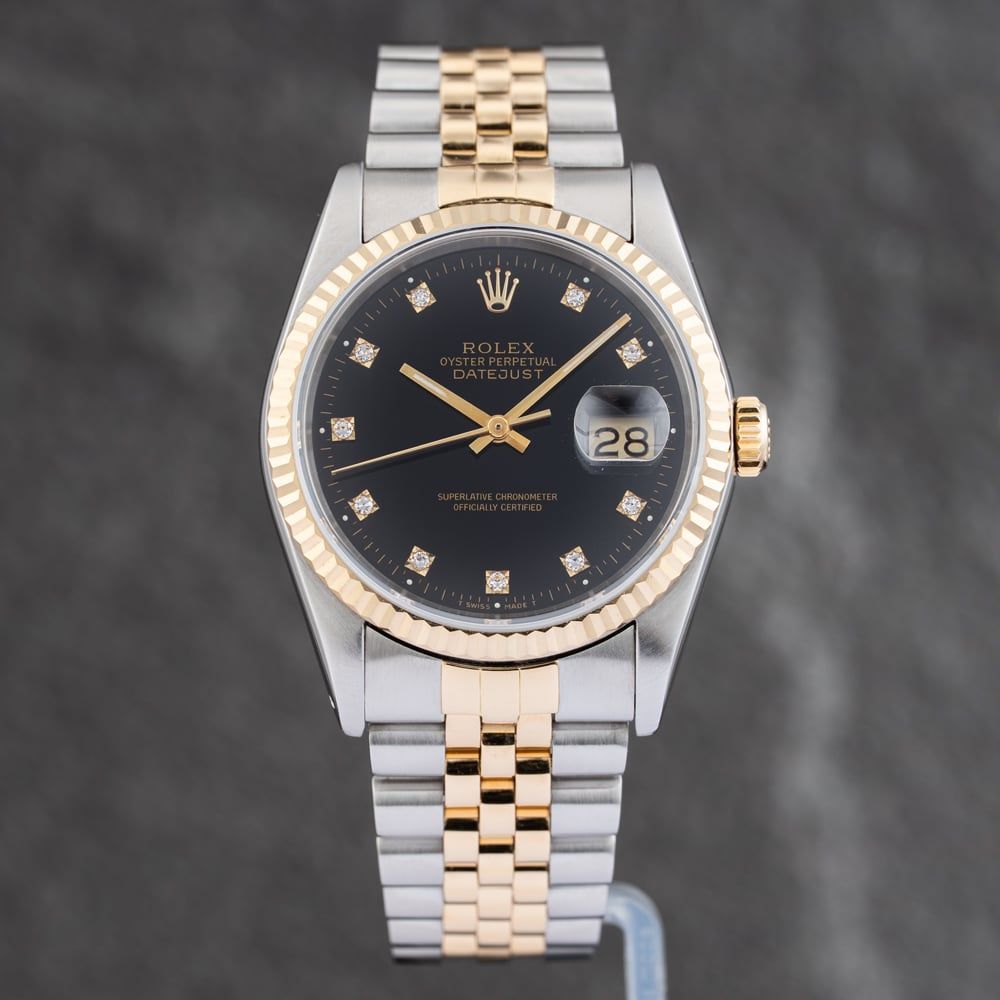
Pre-Owned Rolex Mens Datejust Black Dial Two Colour Bracelet Watch
£6,995
Pre-Owned Rolex Mens Datejust with black dial, two colour bracelet, and 18ct yellow gold bezel. A stronger vintage Datejust option with diamond hour markers, automatic movement, and original box and papers.
Best when you want stronger brand access, but still need to check condition, documentation, and retailer confidence carefully.
What selected specialist sources say
Why buyers choose it
2 independent publisher groups reviewed
Last reviewed 24 June 2026
The case for it
The Datejust is repeatedly called the most universally wearable Rolex — neutral enough for any outfit yet built like a proper daily watch, with strong everyday usability and accuracy.
What selected sources highlight
- Brand recognition
- Everyday wearability
- Resale confidence
- Timeless design
- Wardrobe versatility
Best for you if
You want one do-everything Rolex with broad recognition, daily robustness, and sensible pre-owned access.
Think twice if
You want a sports-Rolex statement, a bargain, or a watch you never have to service or treat carefully.
See the evidence behind these buying signals
The Datejust is repeatedly called the most universally wearable Rolex — neutral enough for any outfit yet built like a proper daily watch, with strong everyday usability and accuracy. It avoids the hype premium and theft risk of the sports models and is one of the easiest routes into Rolex on the pre-owned market. The recurring caveats are practical: polished surfaces scratch easily and servicing is an ongoing cost.
Specialist publications & reviews
- Time+Tide: Specialist opinion often names the Datejust the most universally wearable Rolex — neutral enough for any outfit while still a proper everyday watch.
- Fratello: Enthusiast coverage treats the Datejust as the safe, do-everything Rolex — hard to place wrong across smart or casual settings.
- Time+Tide: Long-term reviews praise daily usability and accuracy, while noting the polished case and bracelet scratch easily and servicing adds ongoing cost.
- Fratello: On value, the Datejust is highlighted as one of the most accessible routes into Rolex on the pre-owned market, without the hype premium of the sports models.
Researched and edited by Marcus Bransbury, Founder & Editor at SimLuxury. How we choose and use sources
This summary synthesises linked specialist, standards, and collector sources; it is not personal financial or authentication advice. SimLuxury is not affiliated with or endorsed by the publications cited.
Keep Browsing The Live Luxury Edit
Move from editorial into the current SimLuxury selection, compare brands and categories, and then step out to the right retailer listing with clearer context.
More helpful resources: