Rolex Datejust 36 vs 41: Which Size Should You Actually Buy in the UK?
A practical SimLuxury guide to Rolex Datejust 36 vs 41, including what really changes on the wrist, which size is easier to live with, and how to judge fit beyond hype.
Browse live watches
Compare what is actually available now, rather than staying in the brand argument.
Build a shortlist
Pre-fill the concierge by category so the next step is five live pieces, not a blank form.
If you want the short answer, choose Datejust 36 if you want the more timeless, balanced, and easier-to-wear version of Datejust. Choose Datejust 41 if you want a stronger modern wrist presence and already know you prefer larger watch proportions. That is the cleanest split.
Buyers get stuck because the internet often treats Datejust 41 like the obvious upgrade. It is not. It is simply the larger answer. Datejust 36 is still the more classically correct Datejust for many wrists and wardrobes. The real decision is not “small versus big”. It is classic proportion versus more assertive proportion.
Quick answer
Choose Datejust 36 if
You want the cleaner, more classical Datejust size, wear tailoring often, or dislike watches that dominate the wrist.
Choose Datejust 41 if
You already know you prefer stronger wrist presence, broader modern proportions, and a more visible luxury watch silhouette.
Best current smaller-feeling Datejust benchmark
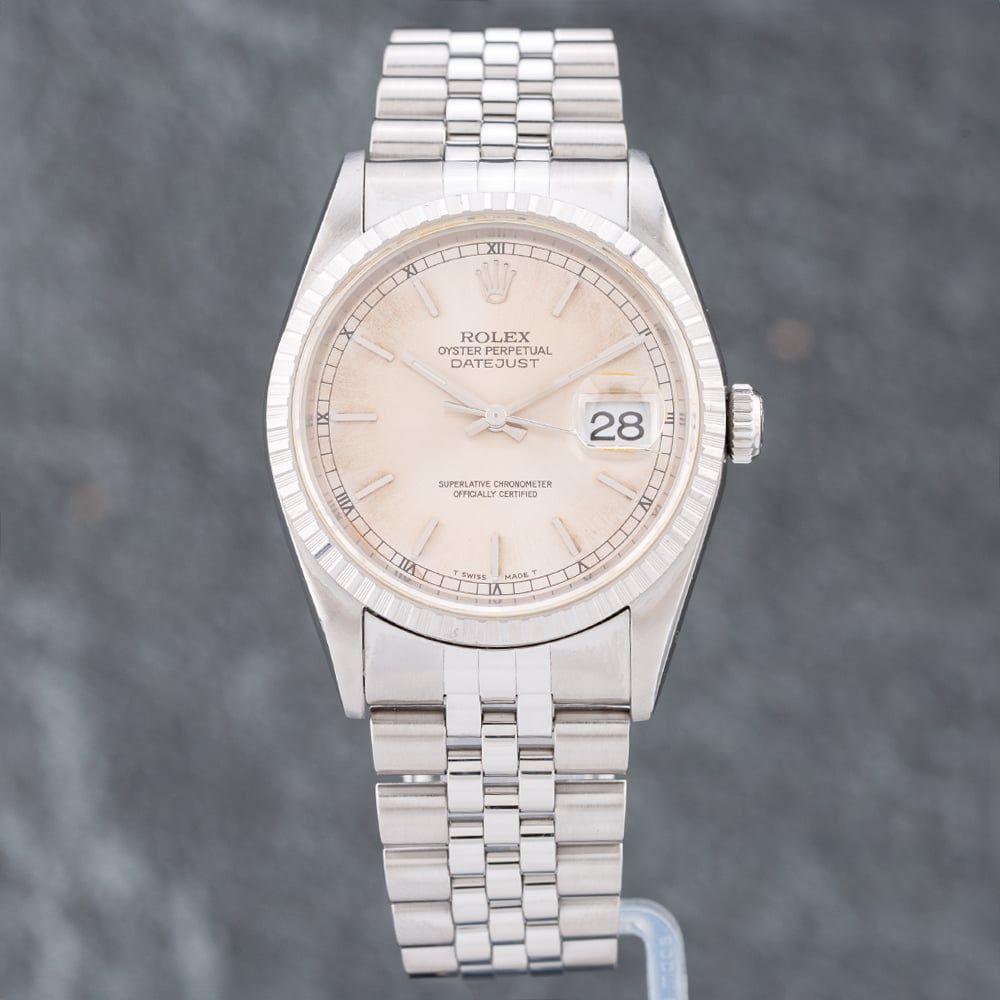
Pre-Owned Rolex Datejust 16220 at £5,195.
Best current higher-presence Datejust benchmark
Pre-Owned Rolex Datejust 16233 at £6,995.
The current SimLuxury Datejust inventory does not give a perfect like-for-like live 36 versus 41 pair, so the smart move is to use the live pieces as proportion benchmarks and then confirm exact reference sizing on the product pages and retailer listings. That is still much better than choosing from forum consensus alone.
Datejust 36 is usually the more timeless size
Datejust 36 works because it keeps the watch in balance. It is the size that most naturally supports the things people already like about Datejust: versatility, polish, and the ability to move between weekday wear, smarter outfits, and quieter luxury without feeling oversized. It is also the size that least depends on trend cycles to look correct.
That matters because many buyers do not really want a larger Datejust. They want a Datejust that feels important. Those are not the same thing. Often the more elegant result comes from the watch fitting naturally rather than looking deliberately larger.
The best current benchmark for that calmer side of the model is the Pre-Owned Rolex Datejust 16220 at £5,195. It is not shouting for attention through metal or dial drama, which makes it a very useful reference point for anyone asking whether the quieter Datejust lane is actually the one they prefer.
Datejust 41 is usually the better answer when you already prefer larger watches
Datejust 41 makes sense when the buyer already knows that a more visible watch is part of the point. It usually feels broader, more contemporary, and more overtly luxurious on the wrist. That is useful if you want Datejust to function as your main visible luxury watch rather than as the easiest all-round Rolex in the wardrobe.
The problem is that some buyers end up in 41 not because it feels better, but because it sounds like the more serious option. That is where mistakes happen. Datejust 41 is strongest when it reflects real wrist preference, not borrowed confidence from modern sizing fashion.
The best current reference point for this more present side of Datejust is the Pre-Owned Rolex Datejust 16233 black dial two-tone at £6,995. This is not a clean steel 41, but it is excellent at revealing whether what you really want is stronger case presence, richer overall watch presence, or simply more Rolex energy through metal and dial contrast.
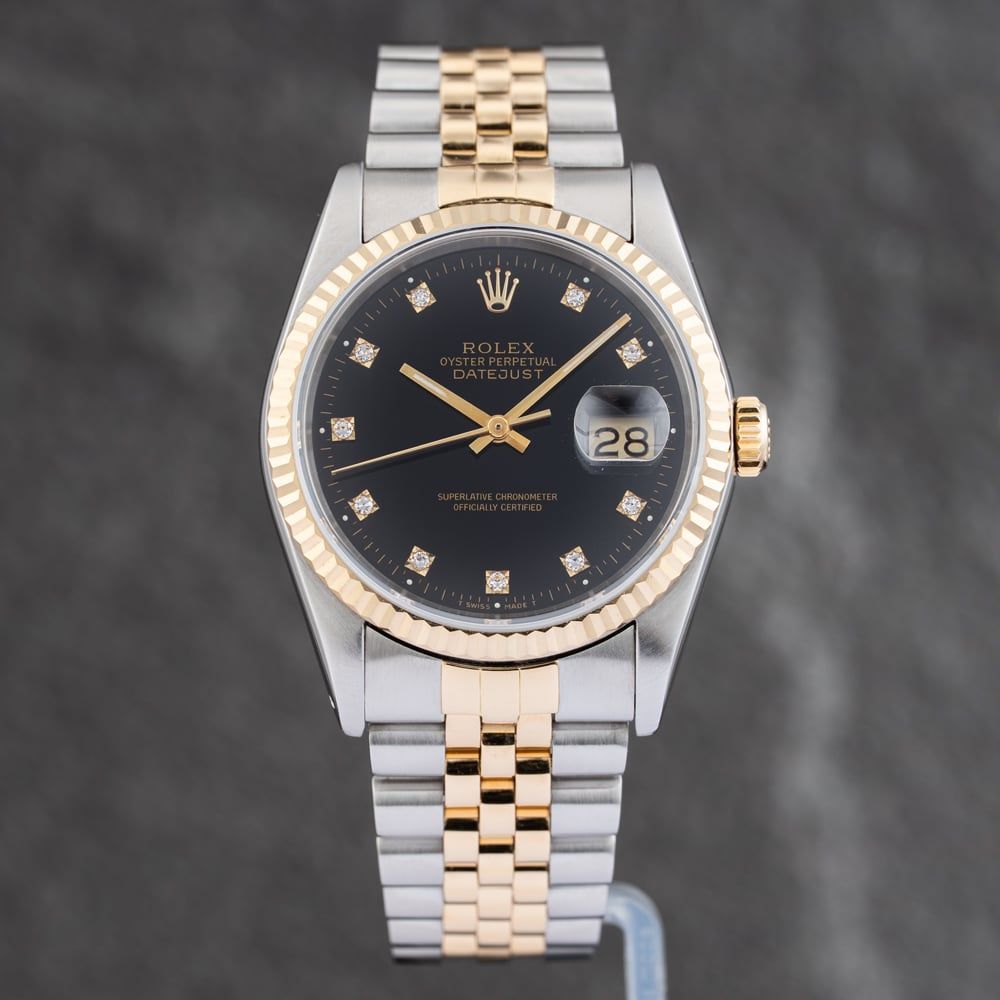
Pre-Owned Rolex Mens Datejust Black Dial Two Colour Bracelet Watch
£6,995
A strong benchmark for the more visible, more assertive side of Datejust buying.
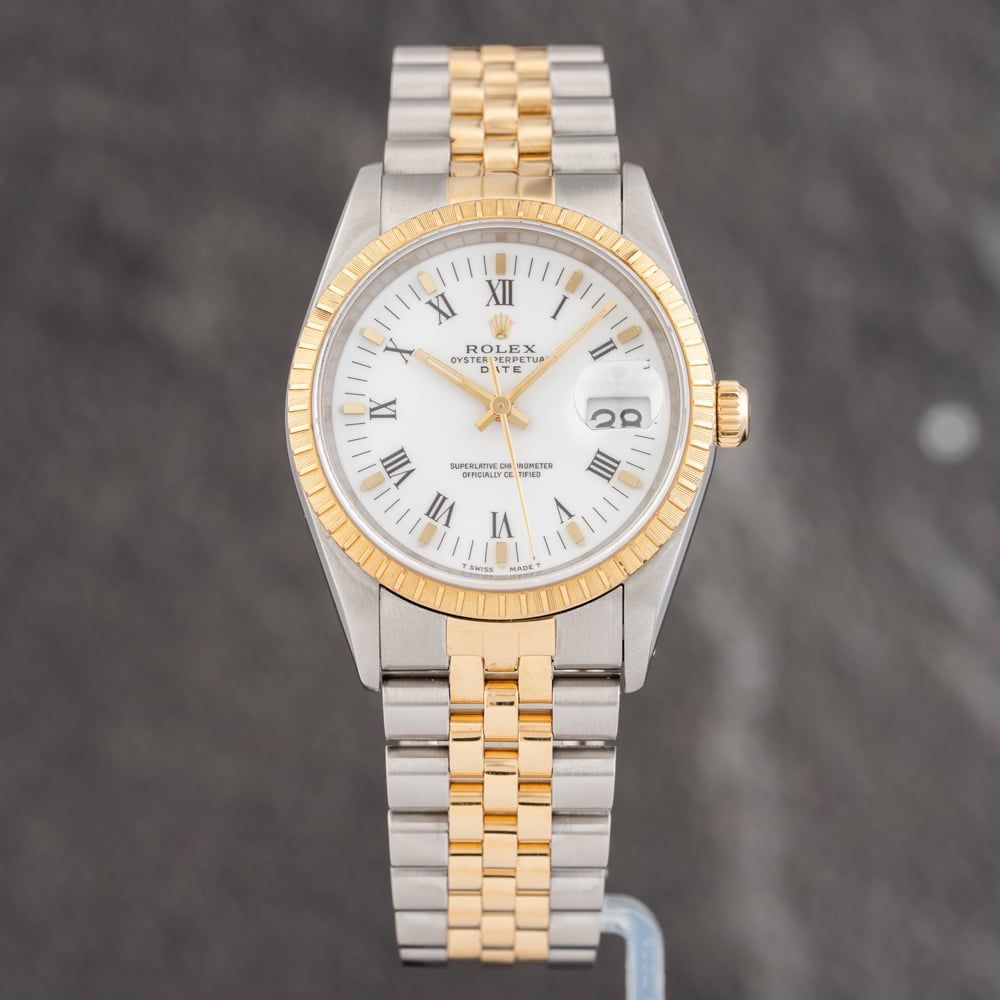
Pre-Owned Rolex Mens Datejust White Dial Two Colour Bracelet Watch
£5,995
Useful if you want stronger Datejust presence but in a calmer, less contrast-heavy direction.
What actually changes between 36 and 41 in real life
The most important change is not mechanical. It is visual and emotional. Datejust 36 usually feels dressier, more discreet, and easier to tuck into everything from office wear to evening clothes. Datejust 41 usually feels more modern, more obvious, and slightly more casual simply because the watch is harder to ignore.
That means the larger size is not always the more versatile one. In fact, for many buyers the smaller size is the one that integrates more easily into real life because it creates less friction with sleeves, smarter clothes, and quieter outfits.
If you struggle with this question generally, the watch size guide is the best companion piece to read next. It helps separate “I like this watch” from “I like this case size on me”.
Dial, bezel, and metal can make the size question look misleading
Many buyers think they are choosing purely between 36 and 41 when they are actually reacting to the total watch. A darker dial, two-tone case, diamond detail, fluted bezel, or warmer metal tone can all make a Datejust feel more present before the case size even enters the discussion. That is why some 36mm Datejusts feel richer or louder than a cleaner 41mm would.
So if you keep saying “I think I need the 41”, ask what you are really responding to. Is it the dial opening? Or is it the extra visual energy coming from the rest of the configuration? The full Datejust buying guide is useful here because it separates size from metal, two-tone, and women’s references more systematically.
Who should usually buy Datejust 36 first
Buy Datejust 36 first if you want the most classical Datejust, if you care about elegance more than statement, or if you already know you dislike larger watches after a few hours on the wrist. It is also usually the stronger choice if the watch needs to cover a lot of different settings without ever feeling too obvious.
The Pre-Owned Rolex Ladies Datejust 179174 at £6,695 is a useful reminder of how convincing smaller Datejust sizing can be when the watch identity is coherent. It is not there to say “buy a ladies reference instead”. It is there to show how much Rolex elegance depends on proportion rather than size inflation.
Who should usually buy Datejust 41 first
Buy Datejust 41 first if you wear larger sports watches comfortably already, want your Datejust to read more modern than classical, or want your Rolex purchase to feel immediately visible rather than quietly correct. It can also be the right answer if your wrist is broad and cleaner 36mm watches repeatedly feel too slight in person.
But if you are still persuading yourself into 41 with abstract logic, pause. That hesitation is often the signal that 36 may actually be the right size.
A useful control question: do you really want a simpler Rolex instead?
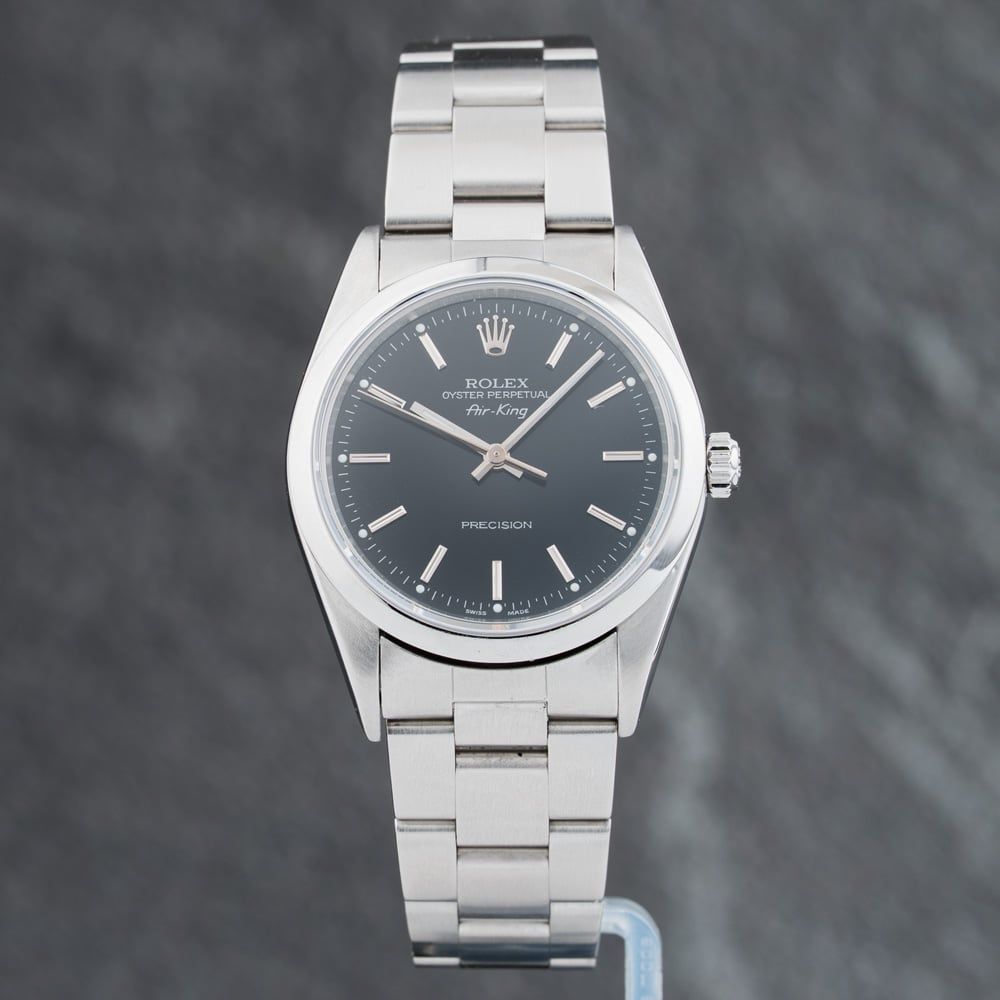
If you keep getting stuck on Datejust size, compare the whole idea against the Pre-Owned Rolex Air-King at £4,500. This is useful because it strips away some of the extra Datejust polish and helps reveal whether your real taste is for simpler Rolex design rather than more or less Datejust presence.
Final advice
Datejust 36 is usually the smarter choice if you want timelessness, proportion, and low-friction daily wear. Datejust 41 is usually the smarter choice if you know you prefer larger modern watch proportions and want the watch to carry more immediate wrist presence. The mistake is treating one as the “real” Datejust and the other as the compromise. They are just different answers.
Start with the live pre-owned Rolex page, compare the calmer 16220 against the stronger-presence 16233, then use the Datejust buying guide and watch size guide if you want the deeper framework before buying.
Quick answers
Is Rolex Datejust 36 too small for a man?+
Is Rolex Datejust 41 better for larger wrists?+
Do Datejust 36 and 41 have different movements?+
Live picks
Live pieces that match this decision
Pre-Owned Rolex Datejust Watch
£5,195
Pre-Owned Rolex Datejust Watch with stainless steel, silver dial, and bracelet. A clean steel Datejust route with automatic movement and 100 metres of water resistance.
Best when you want stronger brand access, but still need to check condition, documentation, and retailer confidence carefully.
Pre-Owned Rolex Mens Datejust White Dial Two Colour Bracelet Watch
£5,995
Pre-Owned Rolex Mens Datejust with white dial, two colour bracelet, and 18ct yellow gold bezel. A compact two-tone Rolex date model with automatic movement, box, and papers.
Best when you want stronger brand access, but still need to check condition, documentation, and retailer confidence carefully.
Pre-Owned Rolex Mens Datejust Black Dial Two Colour Bracelet Watch
£6,995
Pre-Owned Rolex Mens Datejust with black dial, two colour bracelet, and 18ct yellow gold bezel. A stronger vintage Datejust option with diamond hour markers, automatic movement, and original box and papers.
Best when you want stronger brand access, but still need to check condition, documentation, and retailer confidence carefully.
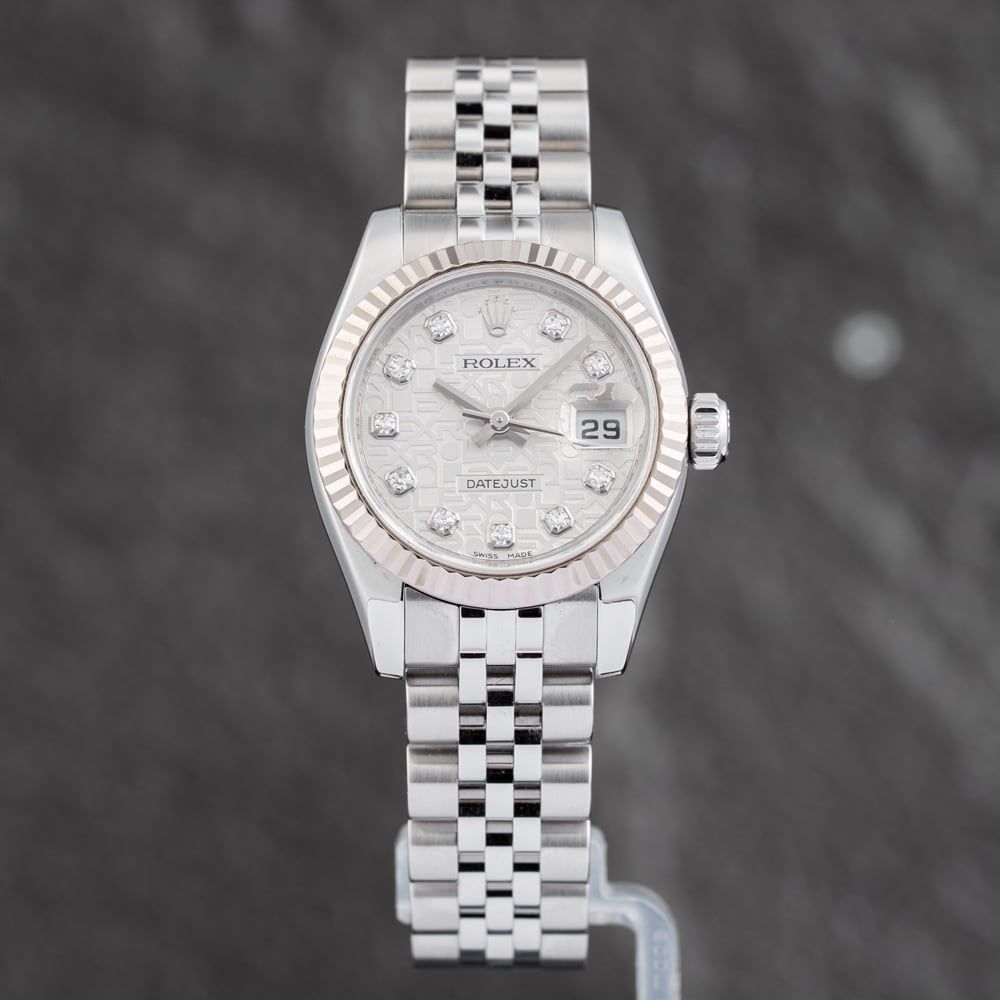
Pre-Owned Rolex Ladies Datejust Jubilee Silver Bracelet Watch
£6,695
Pre-Owned Rolex Ladies Datejust with silver dial, Jubilee bracelet, and diamond hour markers. A classic ladies Datejust profile with automatic movement and original box and papers.
Best when you want stronger brand access, but still need to check condition, documentation, and retailer confidence carefully.
What selected specialist sources say
Why buyers choose it
2 independent publisher groups reviewed
Last reviewed 24 June 2026
The case for it
The Datejust is repeatedly called the most universally wearable Rolex — neutral enough for any outfit yet built like a proper daily watch, with strong everyday usability and accuracy.
What selected sources highlight
- Brand recognition
- Everyday wearability
- Resale confidence
- Timeless design
- Wardrobe versatility
Best for you if
You want one do-everything Rolex with broad recognition, daily robustness, and sensible pre-owned access.
Think twice if
You want a sports-Rolex statement, a bargain, or a watch you never have to service or treat carefully.
See the evidence behind these buying signals
The Datejust is repeatedly called the most universally wearable Rolex — neutral enough for any outfit yet built like a proper daily watch, with strong everyday usability and accuracy. It avoids the hype premium and theft risk of the sports models and is one of the easiest routes into Rolex on the pre-owned market. The recurring caveats are practical: polished surfaces scratch easily and servicing is an ongoing cost.
Specialist publications & reviews
- Time+Tide: Specialist opinion often names the Datejust the most universally wearable Rolex — neutral enough for any outfit while still a proper everyday watch.
- Fratello: Enthusiast coverage treats the Datejust as the safe, do-everything Rolex — hard to place wrong across smart or casual settings.
- Time+Tide: Long-term reviews praise daily usability and accuracy, while noting the polished case and bracelet scratch easily and servicing adds ongoing cost.
- Fratello: On value, the Datejust is highlighted as one of the most accessible routes into Rolex on the pre-owned market, without the hype premium of the sports models.
Researched and edited by Marcus Bransbury, Founder & Editor at SimLuxury. How we choose and use sources
This summary synthesises linked specialist, standards, and collector sources; it is not personal financial or authentication advice. SimLuxury is not affiliated with or endorsed by the publications cited.
Keep Browsing The Live Luxury Edit
Move from editorial into the current SimLuxury selection, compare brands and categories, and then step out to the right retailer listing with clearer context.
More helpful resources: