
Coloured Gemstone Jewellery UK | Tanzanite, Aquamarine, Morganite and More — The Practical Guide
A comprehensive SimLuxury guide to buying coloured gemstone jewellery in the UK. Covers tanzanite, aquamarine, morganite, sapphire, emerald, ruby, and blue topaz — what makes each stone distinct, which gold pairings work, occasion and birthstone matches, and which specific pieces are worth considering right now.
Browse jewellery gifts
See live earrings, pendants, and bracelets once the budget band is fixed.
Build a shortlist
Pre-fill the concierge so the next step is giftable live pieces, not more theory.
Coloured gemstone jewellery requires a different framework than diamond jewellery. With diamonds, most buyers are comparing cut, carat, and setting — the stone itself is a constant. With coloured stones, the stone is the main variable. The colour, origin, treatment history, and rarity of the gemstone determine more of the value than anything else about the piece. Getting comfortable with that shift is the first step to buying coloured gemstone jewellery with confidence.
This guide covers the stones you are most likely to encounter in fine jewellery in the UK right now — tanzanite, aquamarine, morganite, blue topaz, amethyst, sapphire, emerald, ruby, and tourmaline. For each, the relevant questions are: what makes it distinctive, what should you look for in a piece, what gold pairing works, and which specific examples are worth considering. Browse earrings, necklaces, and bracelets on SimLuxury alongside this guide to see the full current selection.
1. Tanzanite: the most commercially significant rare gemstone in the market today
Tanzanite is found in a single deposit on Earth — an 8km strip of land at the foot of Mount Kilimanjaro in northern Tanzania. No comparable deposit has ever been found elsewhere. Known reserves are expected to be exhausted within decades. This is a stone you can make a credible case for buying now, while meaningful supply still exists, rather than later when it may not.
The optical property that makes tanzanite distinctive is trichroism: viewed from different angles, under different light conditions, it shifts between deep violet-blue, blue, and a warm reddish-purple. In daylight it tends to read as blue-violet. In incandescent light it shifts toward warmer purple. This is not a flaw — it is a defining characteristic of the stone, and the most prized specimens show all three colours clearly at different angles.
Tanzanite is almost always heat treated before cutting — this is standard practice in the trade and does not diminish value, as it removes the brownish component naturally present in rough tanzanite and concentrates the blue-violet colour range. Untreated tanzanite is theoretically more "natural" but the treated stone is the commercial standard, widely recognised and fully acceptable.
Quality grades in tanzanite are not standardised the way diamond colour grades are, but saturation and tone are the key variables. Deeply saturated, vivid blue-violet tanzanite is more valuable per carat than pale or greyish material. Cut quality matters too — tanzanite is trichroic, so the way it is oriented and cut determines which colours dominate when the stone is viewed face-up.
The current SimLuxury tanzanite selection spans a significant price and specification range:
Tivon Oval Tanzanite & Diamond Stud Earrings (18ct White Gold) — £1,795
An accessible entry point for tanzanite. Oval cut, 18ct white gold, diamond accent stones. The white gold setting strengthens the blue-violet reading of the stone rather than warming it toward purple. Good for buyers who want a clean, everyday tanzanite stud without the scale of a larger cluster piece.
Tivon Classic Pear-Cut Tanzanite & Diamond Stud Earrings (18ct White Gold) — £2,795
Pear cut tanzanite with diamond surround. The pear cut elongates the stone and gives more face-up surface area at the same carat weight, which means more colour display. A meaningful step up from the oval studs — this is a piece with presence.
Tivon Tanzanite, Pink Sapphire & Diamond Cluster Studs (18ct White Gold) — £4,980
The premium tanzanite earring in the selection. A multi-stone cluster combining tanzanite, pink sapphire, and diamonds — the colour interplay between the violet-blue tanzanite and warm pink sapphire is genuinely unusual and more distinctive than a single-stone piece. For buyers who want tanzanite jewellery that reads as a clear statement rather than an elevated stud, this is the one.
In tanzanite necklaces, the range covers from an accessible cluster pendant to a significant platinum piece:
Tivon Classic Blue Topaz & Diamond Cluster Necklace — £1,165 offers the most accessible coloured stone necklace in the selection. For a specifically tanzanite necklace: the Tivon Pear-Cut Tanzanite & Diamond Necklace (18ct White Gold) — £2,295 and the Classic Trillion-Cut Tanzanite & Diamond Necklace — £2,395 are both strong mid-range options. The Platinum Oval Tanzanite & Diamond Cluster Necklace — £3,995 is the prestige option: platinum setting rather than white gold, larger cluster format, meaningful statement for a significant occasion.
2. Aquamarine: clarity, depth, and the Santa Maria distinction
Aquamarine is a blue beryl — part of the same mineral family as emerald and morganite, with a characteristic pale to medium sea-blue colour. At its best, high-quality aquamarine has exceptional clarity (it forms naturally with fewer inclusions than most coloured gemstones) and a cool, transparent blue that reads well in daylight.
The most significant quality distinction in aquamarine is colour saturation. Standard commercial aquamarine is pale blue to medium blue. The highest quality material — historically associated with the Santa Maria de Itabira mine in Brazil — is deeply saturated, vivid blue-green, and commands significant premiums over standard quality at comparable sizes. When a listing describes "Santa Maria aquamarine," it is making a specific quality claim about saturation and tone, not just the origin (most Santa Maria-quality stone today comes from multiple sources, not that specific mine).
Tivon Santa Maria Aquamarine & Diamond Cluster Stud Earrings (18ct White Gold) — £2,995
The premium aquamarine earring. The Santa Maria designation here signals a more vivid, deeply saturated stone rather than the pale aquamarine typical in lower price points. 18ct white gold setting with diamond cluster surround. For buyers who want aquamarine jewellery that reads as clearly premium rather than simply decorative, this is the correct comparison.
Tivon Oval-Cut Aquamarine & Diamond Necklace (18ct White Gold) — £1,595
The accessible aquamarine necklace. Oval cut, white gold pendant with diamond accents. A strong choice for a March birthstone gift or for buyers who want a clean, elegant pendant with a cooler colour palette than sapphire provides.
Tivon Santa Maria Aquamarine & Diamond Necklace (18ct White Gold) — £3,995
Steps up to Santa Maria quality stone in a larger, more complex necklace format. A significant aquamarine piece for buyers who want maximum colour display in a necklace setting. The price differential over the oval-cut pendant reflects the stone quality step and the larger total weight.
3. Morganite: the pink beryl case for rose gold
Morganite is the pink to salmon-pink variety of beryl, the same mineral family as aquamarine. Its colour ranges from very pale blush to a stronger peach-rose, with the finest stones showing saturated pink with no brownish component. Unlike sapphire or tanzanite, morganite is not especially rare — its appeal lies more in its colour, its excellent clarity (like aquamarine, it tends to form cleanly), and the way it pairs almost uniquely naturally with rose gold.
The rose gold and morganite pairing is perhaps the strongest natural colour relationship in coloured gemstone jewellery. Where white gold and platinum are the correct settings for blue-toned stones like tanzanite and aquamarine (to keep the stone looking cool and vivid), the warm pink of 18ct rose gold reinforces the warm blush of morganite, creating a coherent palette. Most morganite jewellery comes in rose gold settings for this reason.
Tivon Trillion-Cut Morganite & Diamond Stud Earrings (18ct Rose Gold) — £1,295
The trillion cut — a triangular brilliant — gives maximum face-up surface area and strong light return for the carat weight. In morganite this means the pale colour is concentrated and reads more vividly than it would in a round or oval cut. 18ct rose gold setting. At £1,295 this is one of the most accessible fine gemstone earrings in the selection, and a strong choice for buyers who want something meaningfully different from diamond studs without a large step in price.
Tivon Trillion-Cut Morganite & Diamond Drop Necklace (18ct Rose Gold) — £4,750
The premium morganite piece. A larger trillion-cut morganite in a drop pendant format, 18ct rose gold, with diamond surround. For buyers who want morganite as a significant occasion piece — anniversary, milestone birthday, engagement-adjacent gift — this is the correct specification. The drop format maximises the stone's face-up display, and at this size the colour is genuinely striking rather than delicate.
4. Blue topaz and amethyst: accessible coloured stones with real appeal
Blue topaz and amethyst occupy a different tier from tanzanite and Santa Maria aquamarine — they are more abundant and therefore more accessible in price. This does not make them lesser jewellery; it means the price-per-visual-impact ratio is excellent and they are strong choices for buyers who want a large, vivid coloured stone in a fine setting at a more accessible budget.
Blue topaz comes in several saturation grades — Swiss Blue (bright, medium-dark), London Blue (deep, slightly inky), and sky blue (pale). The deeper grades are more desirable. The Tivon and Geoghegan pieces in the selection both feature well-saturated blue topaz with diamond settings in 18ct white gold:
Tivon Blue Topaz & Diamond Cluster Stud Earrings (18ct White Gold) — £1,295
A strong entry-point coloured stone earring. The cluster format with diamonds amplifies the visual presence of the topaz significantly. At £1,295 this offers a genuine fine jewellery piece in 18ct white gold with real stone character.
Geoghegan Satellite Blue Topaz & Diamond Halo Cluster Stud Earrings — £2,495
Steps up to Geoghegan's own design language — the Satellite collection features a distinctive halo cluster construction around a central stone. At £2,495 this is a more statement earring with stronger design character than a simple cluster. For buyers who want coloured stone earrings with a clear brand design story rather than a generic setting, Geoghegan is the right starting point.
In necklaces, the Geoghegan Satellite Blue Topaz & Diamond Cluster Necklace — £2,995 applies the same Satellite design language to a pendant. A strong pairing with the matching Geoghegan earrings for buyers who want a coordinated look.
Amethyst is the purple variety of quartz — one of the most recognisable coloured stones, with a deep violet-purple colour that pairs well with both white and yellow gold. The Tivon Amethyst & Diamond Round Cluster Stud Earrings (18ct White Gold) — £1,895 is a strong February birthstone or 6th anniversary piece — the round cluster format gives significant visual presence for the price point.
5. Sapphire: the benchmark coloured stone
Blue sapphire is the coloured stone most buyers use as a reference point — it is the most commercially established, the most consistently prized, and carries the strongest provenance story (Kashmir sapphire being among the most expensive gemstones per carat in the world, though the pieces here are not Kashmir origin). Sapphire is also an excellent choice for durability: it has a Mohs hardness of 9, second only to diamond at 10, which makes it the most practical choice for jewellery worn regularly.
The current selection includes sapphire pieces across earrings, necklaces, and bracelets. For earrings: the 18ct White Gold Sapphire & Diamond Star Cluster Stud Earrings — £1,595.95 and the 18ct White Gold Marine Sapphire & Diamond Wave Cluster Earrings — £2,995 represent two different scale and design levels. For necklaces: the 18ct White Gold 1.06ct Sapphire & Diamond Cluster Necklace — £1,795 and the 18ct White Gold Jazz Diamond & Sapphire Necklace 1.23ct — £2,995 cover the mid-to-premium range. September birthstone, 45th anniversary stone — sapphire carries the strongest gifting narrative of any coloured gemstone in terms of widely understood symbolism.
For buyers considering sapphire at the premium end, Natkina's multi-sapphire pieces represent the high-end of the category: the Natkina Bangle Sapphire Diamond 18K Rose Gold Bracelet — £8,813 and the Natkina Chic Multi-Sapphire Diamond 18K Rose Gold Necklace — £12,634 are significant statement pieces in the upper luxury tier.
6. Emerald and ruby: the classic coloured stones with the highest ceiling
Emerald and ruby are the two coloured gemstones with the highest value ceiling — fine Colombian emerald and Burmese ruby are among the most expensive gemstones in the world per carat, consistently outperforming comparable diamonds at auction. The pieces available at accessible UK retail prices are not at that stratospheric level, but the colour character of a good emerald or ruby is unmistakable and the stones carry genuine depth.
Emerald (May birthstone, 20th anniversary stone) is characterised by its rich green colour and, typically, natural inclusions called a "jardin" (garden) — unlike the near-perfect clarity typical in aquamarine and tanzanite, inclusions are expected and accepted in emerald. Treated emeralds (oil or resin filling of surface-reaching inclusions) are standard in the trade and acceptable, but should be disclosed.
The Tivon Eden collection represents the premium emerald pieces: the Tivon Emerald & Diamond Eden Necklace (18ct Yellow Gold) — £11,000 and the Tivon Emerald & Diamond Eden Bracelet (18ct Yellow Gold) — £6,990. These are significant fine jewellery purchases in yellow gold with vivid emerald stones — pieces for buyers who want a flagship gemstone piece rather than an accessible coloured stone addition to their collection.
More accessible emerald options include the 18ct White Gold Emerald & Diamond Cluster Stud Earrings — £1,995, the 18ct Yellow Gold Pear-Cut Emerald & Diamond Dropper Earrings — £3,195, and the 18ct White Gold Emerald & Diamond Octagonal Pendant — £2,995.
Ruby (July birthstone, 40th anniversary stone) carries the most emotionally direct of all gemstone colour associations. The finest rubies are strongly saturated red with a slight blue secondary hue — "pigeon's blood" is the trade term for the most prized colour. The 18ct White Gold Ruby & Diamond Hoop Earrings — £2,795 and the 18ct White Gold Ruby & Diamond Fancy Bracelet — £2,795 are well-matched milestone gift choices for the 40th anniversary or a July birthday where the brief is a genuinely special coloured stone piece.
7. Green tourmaline: the connoisseur choice
Tourmaline is one of the most colour-diverse minerals in nature — it comes in virtually every colour, with different trade names for different varieties (rubellite for red-pink, indicolite for blue, paraíba for vivid neon-blue-green). Green tourmaline overlaps with tsavorite garnet and emerald in the green spectrum, but has a distinctive vivid saturation at its best that is different from emerald's cooler, darker character.
The Tivon Green Tourmaline & Diamond Necklace (18ct White Gold) — £4,990 is a strong connoisseur choice — a stone that most buyers will not immediately identify but that carries real gemological character. Paired with the Geoghegan Cannele: the Geoghegan Cannele Rubellite Tourmaline & Diamond Cluster Pendant (18ct Rose Gold) — £1,995 — rubellite tourmaline in the vivid red-pink range, here set in the Cannele's distinctive petal cluster format. October birthstone. For buyers who want something genuinely unusual, tourmaline in either direction of the colour spectrum is the answer.
8. Gold colour and stone pairing: the guide
The relationship between metal colour and stone colour is one of the most consistently underestimated decisions in coloured stone jewellery. The wrong metal can make a stone look washed out or tonally confused.
18ct white gold or platinum works for blue and violet stones — tanzanite, aquamarine, blue topaz, sapphire. The cool metal keeps the stone's cool hue clean and undiluted. Platinum is slightly more prestigious and more durable; 18ct white gold is the more common retail choice at moderate price points.
18ct rose gold is the natural pairing for warm-toned stones — morganite, peach sapphire, rubellite tourmaline. The warm pink of the gold reinforces the stone rather than contrasting with it. Rose gold with blue stones is a deliberate design contrast; it works as a statement but is less "correct" as a traditional pairing.
18ct yellow gold is the classic setting for emerald, ruby, and deeper green tourmaline — this is a traditional pairing with centuries of precedent. Yellow gold with green or red stones creates a warm, rich, maximalist colour story that reads clearly as fine jewellery. It is less suited to pale, cool-toned stones where it will warm the colour in a way that undermines the stone's character.
9. Gifting by occasion and birthstone
Coloured gemstone jewellery carries the strongest calendar of gifting occasions of any jewellery category, because of the birthstone and anniversary stone traditions. Key matches for the stones covered in this guide:
March birthday: Aquamarine — the Tivon Aquamarine Necklace £1,595 is the most direct choice. May birthday: Emerald — Emerald & Diamond Cluster Studs £1,995. July birthday: Ruby — Ruby & Diamond Hoop Earrings £2,795. September birthday: Sapphire — Sapphire & Diamond Star Cluster Studs £1,595.95. December birthday: Tanzanite — Tivon Tanzanite & Diamond Stud Earrings £1,795.
Anniversary stones: 20th anniversary is emerald — the Tivon Eden bracelet or necklace for a landmark piece. 40th is ruby. 45th is sapphire. 24th is tanzanite. These are not universally observed conventions, but the gifting intent is clear and the stones are well matched to the emotional weight of the occasion.
Compare with the diamond stud earrings guide and luxury necklaces guide if the decision between coloured stone and diamond jewellery is still open. For a milestone occasion where the gift needs to feel maximally considered, the Luxury Jewellery Gifts guide covers how coloured stone pieces compare to diamond options across the full range.
Quick answers
Is tanzanite rarer than diamond?+
What is the difference between standard aquamarine and Santa Maria aquamarine?+
Is morganite a good choice for a milestone gift?+
Do coloured gemstones need a certificate like diamonds do?+
What is the birthstone for each month and which stones are in this guide?+
Live picks
Live pieces that match this decision
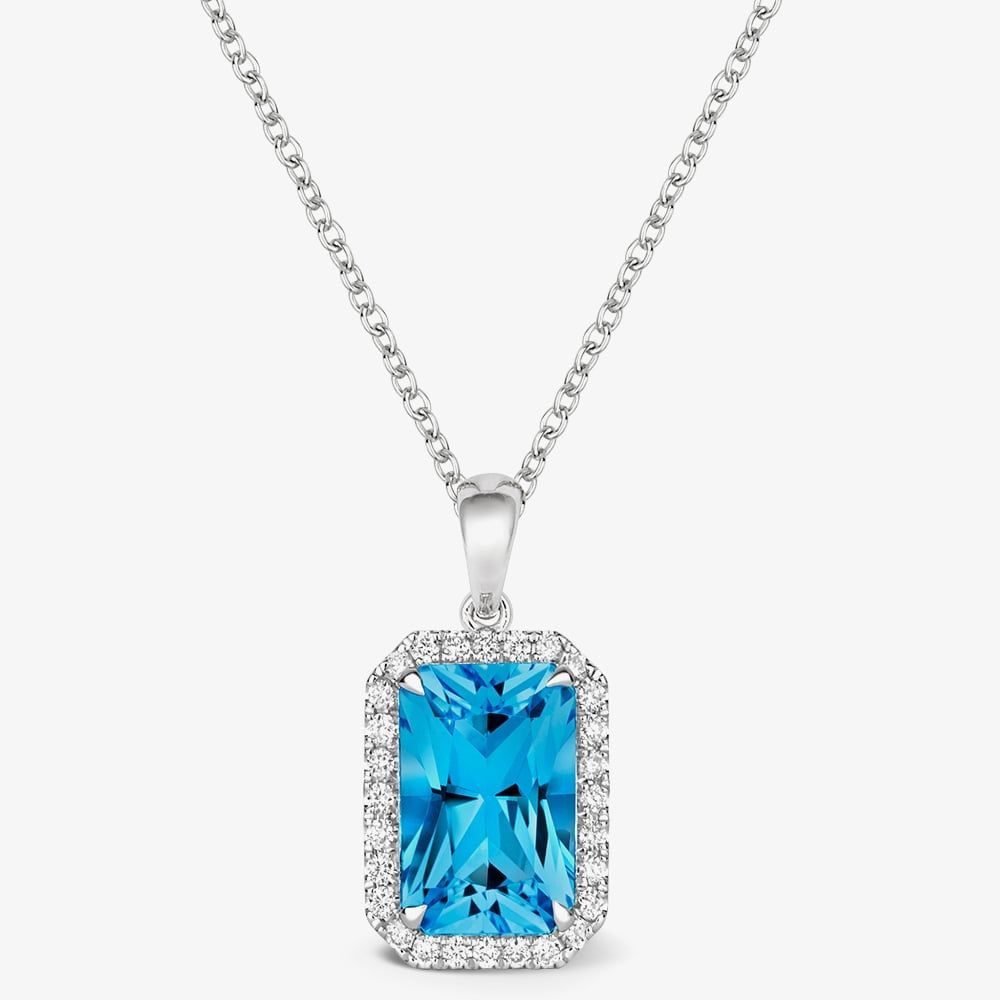
Tivon Classic 18ct White Gold Blue Topaz & Diamond Cluster Necklace
£1,165.00
18ct White Gold necklace set with topaz & diamond in a cluster profile. The cluster layout adds extra visual spread without needing a larger single stone.
Best when the jewellery should feel meaningful, wearable, and clearly more elevated than a generic luxury gift.
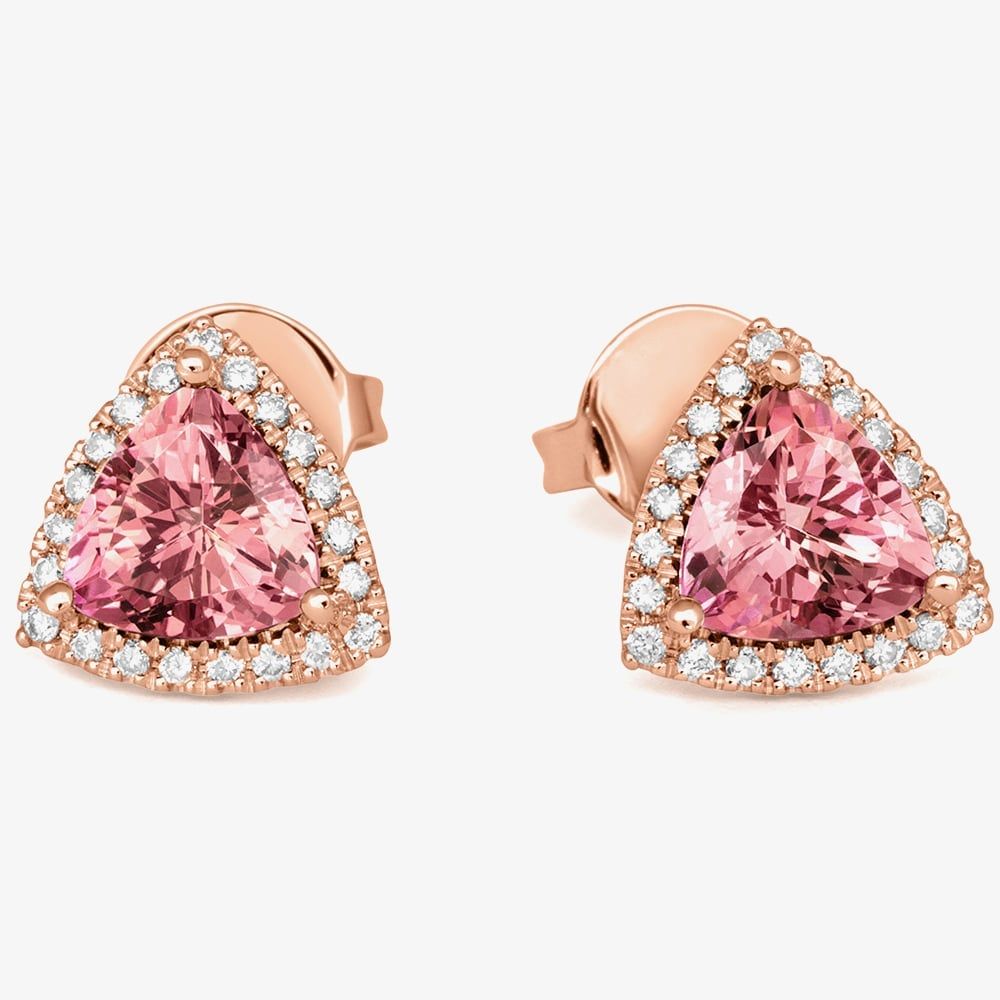
Tivon 18ct Rose Gold Trillion-Cut Morganite & Diamond Stud Earrings
£1,295.00
18ct Rose Gold earrings set with morganite & diamond in a stud profile. Stud styling keeps it easy to wear day to day.
Best when the brief is gift confidence first, because earrings are often the safest luxury jewellery category.
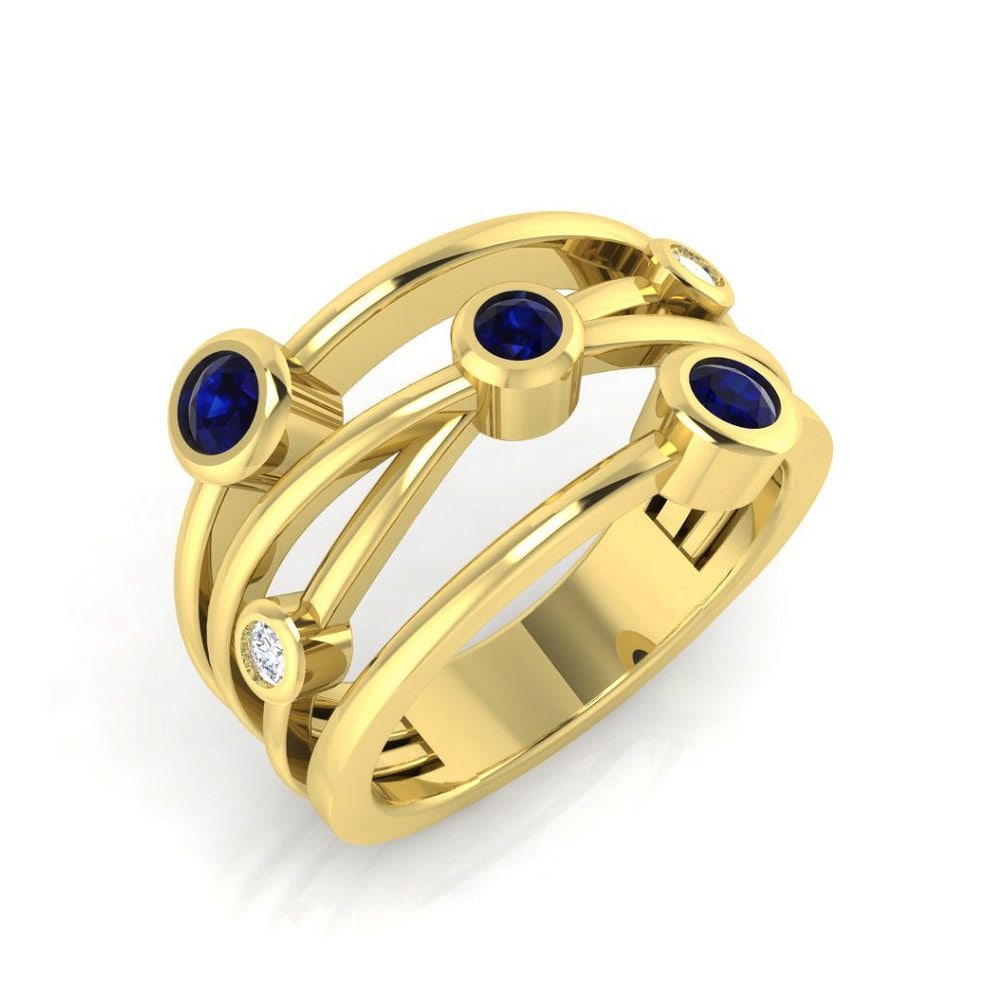
9ct Yellow Gold Sapphire and Diamond Ring
£1,150
Metal: 9ct Yellow Gold Stones: Sapphire x3 & Diamond x2 Sapphire Cut: Round Sapphire Weight: 0.45ct Diamond Cut: Round Brilliant Diamond Carat: 0.09ct Diamond Colour: G Diamond Clarity: SI2 Size: M Supplied new by Ple...
Best when you know the recipient’s style and sizing well enough to buy something more personal and less forgiving.
See also
Luxury Jewellery Buying Guide UK
Return to the core jewellery framework if you still need the broader safest-choice and category logic first.
Best Milestone Birthday Jewellery Gifts
Especially relevant because coloured stones often work brilliantly for landmark birthdays.
Best Anniversary Jewellery Gifts
Useful if the gemstone purchase needs to feel romantic and occasion-specific rather than just personal.
White Gold vs Yellow Gold vs Rose Gold
The best support page if the stone decision is really becoming a metal-tone decision too.
How to Choose Jewellery When You Don't Know Her Exact Style
Helpful if colour feels appealing, but you still need to decide whether it is actually believable on the recipient.
Keep Browsing The Live Luxury Edit
Move from editorial into the current SimLuxury selection, compare brands and categories, and then step out to the right retailer listing with clearer context.
More helpful resources: